
Introduction
Many people want a straight smile. Today, you can choose from several teeth straightening options. The most common choices are clear aligners and braces. In this blog, we compare clear aligners vs braces. We explain how each works, their pros and cons, and what to expect. This guide will help you understand which option may suit you best.
How Clear Aligners Work
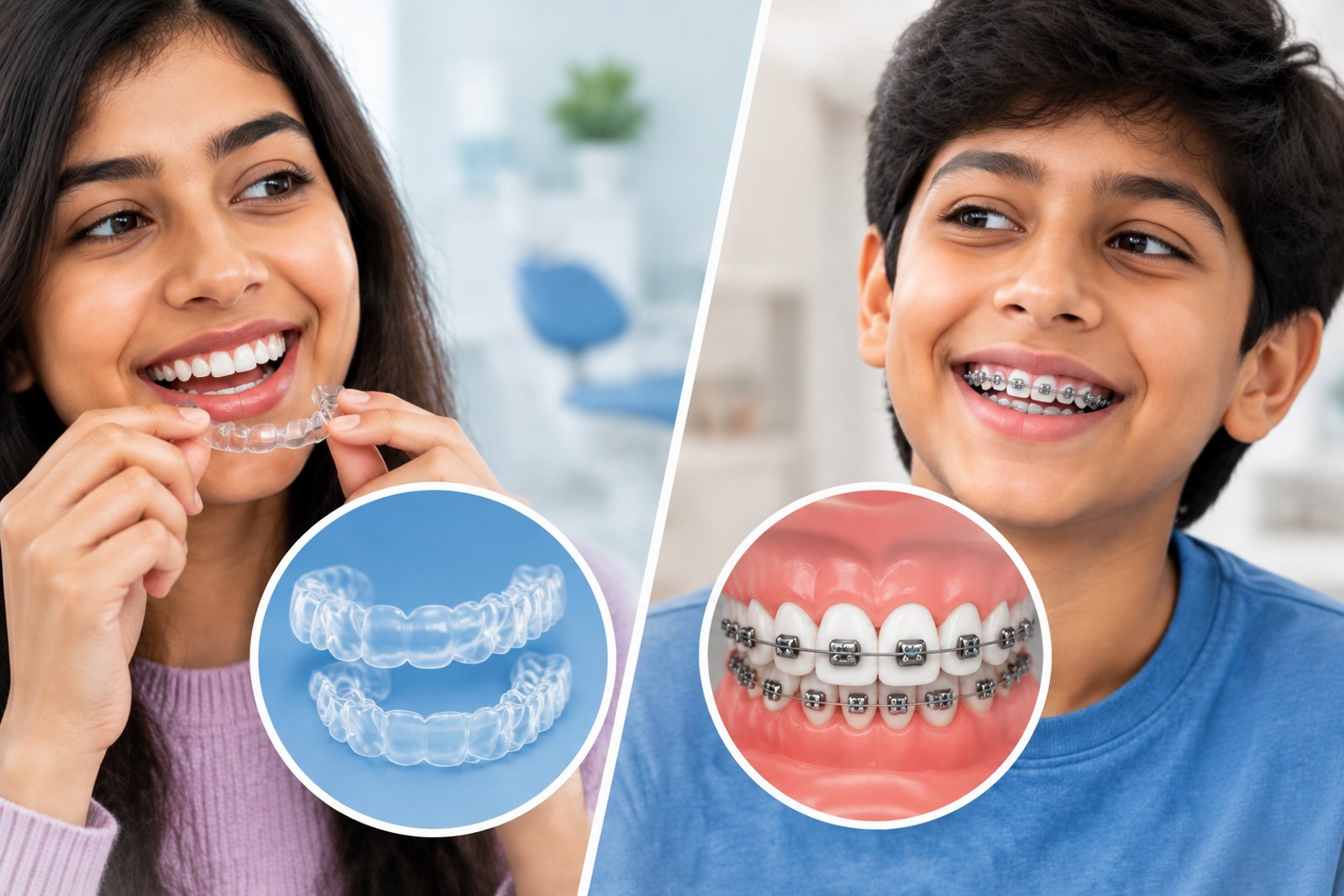
Clear aligners are thin, plastic trays that fit over your teeth. They are also called invisible aligners. Dentists use 3D scans or molds to design each set. You wear each tray for about two weeks. Then, you switch to the next set. Over time, your teeth move into place. Most people wear aligners for 20 to 22 hours each day. You only remove them to eat, drink, brush, or floss.
How Braces Work
Braces use metal brackets and wires to move teeth. Dentists glue brackets to each tooth. Then, they connect the brackets with a thin wire. The wire puts gentle pressure on your teeth. Over time, this pressure shifts your teeth into the right spot. Braces stay on your teeth all the time. Your dentist adjusts them every few weeks to keep your teeth moving.
Key Differences Between Clear Aligners and Braces
While both options straighten teeth, they work in different ways. Here are some key differences:
Pros and Cons of Clear Aligners
Clear aligners have become a popular teeth straightening option. However, they have both benefits and drawbacks.
Pros and Cons of Braces
Traditional metal braces are still widely used. They also have their own advantages and disadvantages.
Suitability: Who Should Consider Each Option?
Not everyone is a good fit for every teeth straightening option. For example, clear aligners work best for mild to moderate cases. People with small gaps, crowding, or mild bite issues may benefit most. Braces are better for complex cases. If you have severe crowding, large gaps, or jaw problems, braces may be needed. Children and teens often use braces, but adults can use both options. Your dentist or orthodontist will help you decide which is best for your needs.
Cost Comparison
Cost is a big factor for many people. In general, traditional metal braces are less expensive than clear aligners. However, prices vary by location and case complexity. Some dental insurance plans may cover part of the cost. It is wise to ask your dentist for a detailed estimate. Also, some clinics offer payment plans to make treatment more affordable.
Maintenance and Oral Hygiene
Good oral hygiene is important during teeth straightening. With clear aligners, you remove them to brush and floss. This makes it easier to keep your teeth clean. However, you must clean the aligners daily. With braces, brushing and flossing can be harder. Food can get stuck around the brackets and wires. Dentists recommend special brushes and floss threaders for braces. No matter which option you choose, regular dental check-ups are important.
Potential Risks and Side Effects
Both clear aligners and braces are safe when used as directed. Still, there can be some side effects:
If you notice any problems, let your dentist know right away. Early care can prevent bigger issues.
What to Expect During Treatment
At the start, your dentist will check your teeth and take x-rays or scans. For clear aligners, you will get a series of trays. You wear each set for about two weeks. For braces, the dentist will attach brackets and wires. You will visit the dentist every few weeks for adjustments. Treatment time depends on your needs. Most people finish in 12 to 24 months. After treatment, you may need to wear a retainer to keep your teeth in place.
Frequently Asked Questions
Start your journey towards better health with expert care at Gahan Dental