
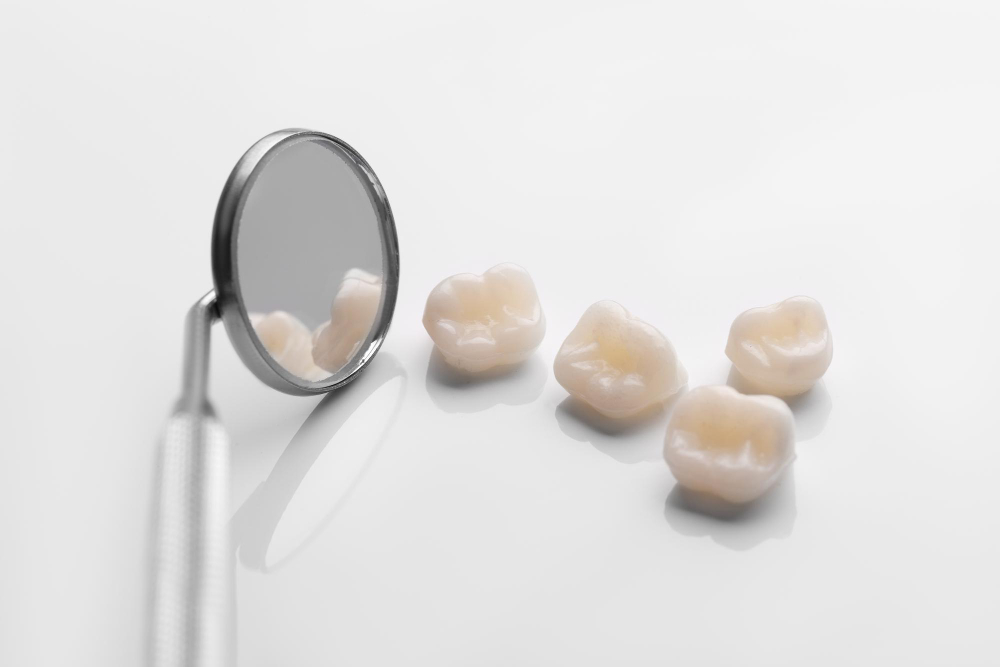
What Are Dental Crowns?
Dental crowns are special caps that cover and protect damaged teeth. Dentists use them to restore the shape, size, and strength of a tooth. Crowns also help improve the look of your smile. In many cases, dental crowns are a key part of tooth restoration. According to the American Dental Association, crowns are a common solution for weak or broken teeth. Because they fit over your natural tooth, crowns can last for many years with proper care.
Types of Dental Crowns
There are several types of dental crowns. Each type offers different benefits. Dentists will help you choose the best one for your needs. For example, some crowns look more natural, while others are stronger.
Because each material has pros and cons, your dentist will discuss which type fits your dental health and budget.
Common Uses of Dental Crowns
Dental crowns help fix many dental problems. For instance, they protect weak teeth from breaking. They also restore teeth that are already broken or worn down. In addition, crowns cover teeth with large fillings when not much tooth is left. Dentists may also use crowns for:
Because crowns are so versatile, they are a top choice for many tooth restoration needs.
Benefits of Dental Crowns for Tooth Restoration
Dental crowns offer many benefits for tooth restoration. First, they help restore the function of your tooth, so you can chew and speak with ease. In addition, crowns protect weak teeth from further damage. They also improve the look of your smile by covering broken or stained teeth. Some other benefits include:
Because crowns are made to match your teeth, they blend in well and look natural.
How Dental Crowns Are Placed
The process of getting a dental crown usually takes two visits. At the first visit, your dentist will examine your tooth and prepare it. This may involve shaping the tooth so the crown fits well. Next, your dentist will take an impression or digital scan of your tooth. While your permanent crown is made, you may get a temporary crown to protect your tooth.
At the second visit, your dentist will remove the temporary crown and place the permanent one. They will check the fit and color before cementing it in place. Because the process is simple, most people can return to normal activities right away.
Caring for Dental Crowns
With good care, dental crowns can last many years. It is important to brush and floss daily to keep your crown and surrounding teeth healthy. For example, use a soft-bristled toothbrush and non-abrasive toothpaste. In addition, avoid biting hard foods or objects, as this can damage your crown. Regular dental checkups help your dentist spot any issues early. Some tips for caring for dental crowns include:
Because crowns cover your tooth, they protect it from decay, but the area at the gumline still needs care.
Potential Risks and Considerations
While dental crowns are safe, there are some risks to consider. For instance, your tooth may feel sensitive after the crown is placed. Sometimes, the crown can become loose or fall off. In rare cases, you may have an allergic reaction to the crown material. If you live in a certain area, your dentist may recommend a specific crown type based on your needs and local dental practices.
Because crowns can wear down over time, regular dental visits are important. If you notice pain, swelling, or a loose crown, contact your dentist right away.
Frequently Asked Questions About Dental Crowns
How long do dental crowns last?
With good care, dental crowns can last 5 to 15 years or longer.
Do dental crowns hurt?
Most people feel little to no pain during the procedure. Some may feel mild soreness after placement, but this usually goes away quickly.
Can I eat normally with a dental crown?
Yes, you can eat most foods. However, it is best to avoid very hard or sticky foods to protect your crown.
Are dental crowns covered by insurance?
Many dental insurance plans cover crowns, especially if they are needed for tooth restoration. Check with your provider for details.
How do I know if I need a dental crown?
Your dentist will examine your tooth and discuss your options. If your tooth is weak, broken, or needs extra support, a crown may be recommended.